
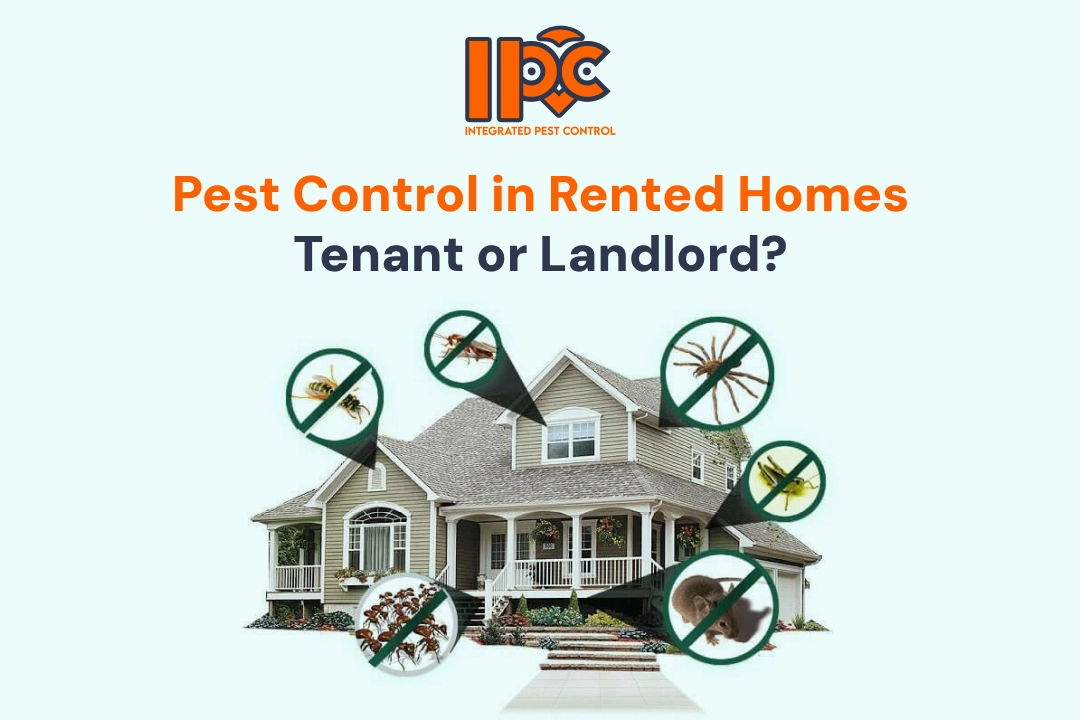
You moved into your rented flat three months ago. Everything seemed fine at first. Then the cockroaches appeared under the kitchen sink. Or maybe it was a bed bug outbreak in the bedroom, or rats getting into your food storage. Whatever the pest, you now have one very urgent question: is this your problem to fix, or your landlord's?
This is one of the most common — and most contentious — disputes between tenants and landlords across India. And the frustrating truth is that there is no single national law that gives a clear, direct answer to the question of pest control tenant or landlord India responsibility. What does exist is a patchwork of rental law principles, the new Model Tenancy Act 2021, and the terms of your specific rental agreement. Understanding all three is how you protect yourself.
This article breaks it all down — practically, plainly, and without the legal jargon.
Is There a Law That Decides Who Pays for Pest Control in India?
The short answer is: sort of. India does not have a single consolidated tenancy law that applies across all states. Rental disputes are governed by a combination of state-level Rent Control Acts, the Transfer of Property Act 1882, and — more recently — the Model Tenancy Act 2021, which is a central advisory framework that states can choose to adopt.
What the Model Tenancy Act 2021 Says (or Doesn't Say)
The Model Tenancy Act 2021, published by the Ministry of Housing and Urban Affairs, is the most significant recent development in Indian rental law. It makes a useful but broad distinction between landlord and tenant obligations:
Landlord obligations: Maintain the property in a habitable, structurally sound condition and carry out repairs that are the result of normal wear and tear or structural deterioration.
Tenant obligations: Keep the property in a clean, hygienic condition and be responsible for day-to-day upkeep including minor repairs resulting from their use.
The Act does not mention pest control explicitly. However, the principle is clear: if pests are present because the property was not habitable or structurally sound when handed over, that is the landlord's responsibility. If pests appeared because of how the tenant lived in the property, it falls on the tenant. Many state-level Rent Control Acts carry similar principles.
The Role of the Rental Agreement Pest Control Clause
In practice, the rental agreement is the most decisive document. If it includes a specific pest control clause — clearly stating who is responsible for what, under which circumstances, and who bears the cost — that clause will govern the dispute. The problem is that most standard rental agreements in India are silent on pest control entirely, leaving both parties in a grey zone.
This is why reading your rent agreement carefully before signing is so important. And if there is no pest control clause, negotiating one in before you sign gives you protection that most tenants in India never have. We'll cover exactly how to draft one later in this article.
When Is the Landlord Responsible for Pest Control?
There are clear situations where the responsibility for pest control falls squarely on the landlord's shoulders. As a tenant, you should be aware of all of them.
Pre-Existing Infestations, Structural Problems, and Building-Wide Pest Issues
If you discover pests shortly after moving in — particularly within the first few weeks — the infestation almost certainly pre-dates your occupancy. This is a landlord's problem, not yours. The same applies in the following scenarios:
Rats or cockroaches entering through structural gaps: Broken drains, cracked walls, gaps around plumbing — these are structural maintenance issues that the landlord is required to fix.
Termites in the building structure: Termite infestations that originate in walls, floors, or the building's foundation are structural by nature and are the landlord's responsibility to address.
Building-wide infestations: If other tenants in the same building or apartment complex are experiencing the same pest problem, it is clearly not caused by any single tenant's habits. Society-level or building-wide pest control is a shared maintenance responsibility, typically coordinated by the landlord or the housing society.
Pest-harbouring conditions that were present at handover: Dirty, damp, or poorly maintained common areas, blocked drains, or sewage issues that attract pests fall under the landlord's upkeep obligation.
If you're dealing with a landlord who is refusing to act on a clear pre-existing infestation, documenting the problem professionally is your first step. Learn how IPC Bharat's pest inspection reports can serve as legal documentation in rental disputes.
When Is the Tenant Responsible for Pest Control?
Post-Occupancy Infestations Caused by Housekeeping and Lifestyle
There are situations where the tenant is, fairly, the responsible party. The key test is whether the infestation arose because of how the tenant occupied the property — not because of its pre-existing condition or structural issues.
Tenants are generally responsible when:
Food is left uncovered or improperly stored, attracting cockroaches, ants, and rodents.
Garbage disposal is irregular, creating a consistent food source for pests near and inside the flat.
Bed bugs are introduced through second-hand furniture, luggage after travel, or clothing.
Standing water is left unaddressed in bathrooms, kitchen sinks, or on balconies, breeding mosquitoes.
The infestation appears well into the tenancy — months or years after moving in — with no structural cause identified.
In these cases, it is reasonable for the landlord to expect the tenant to arrange and pay for pest control, particularly if the rental agreement supports this position.
What to Do If Your Landlord Refuses to Act on a Pest Problem
This is where many tenants get stuck. You've reported the infestation. Your landlord is dismissive, delays indefinitely, or simply ignores you. Here's how to handle it step by step.
Documentation, Formal Notice, and Escalation Steps
Document the infestation thoroughly. Take date-stamped photographs and videos. Note down when you first noticed the problem and any related conditions (water leakage, cracks, common area hygiene).
Report in writing. Send a message or email to your landlord specifically describing the pest problem. Written communication creates a paper trail. Avoid relying solely on verbal conversations.
Get a professional inspection report. A certified pest control company like IPC Bharat can provide an inspection report that identifies the type of infestation, its likely origin, and recommended treatment. This report carries weight in any formal dispute.
Send a formal notice. If the landlord continues to ignore the issue, send a formal written notice — ideally through a lawyer or by registered post — referencing their maintenance obligations under the Model Tenancy Act or your state's Rent Control Act.
File a complaint. If the landlord still doesn't respond, you can approach the Rent Authority established under the Model Tenancy Act in states where it has been adopted, or file a consumer complaint. The National Consumer Disputes Redressal Commission is another avenue for redressal if the issue amounts to deficiency in service.
Deduct from rent as a last resort. In some states, tenants can deduct reasonable repair costs from rent after giving proper notice and waiting a reasonable time. Consult a lawyer before doing this, as the rules vary by state.
How to Add a Pest Control Clause to Your Rent Agreement
Prevention is always better than a dispute. The most effective way to protect yourself as either a tenant or a landlord is to include a clear, specific pest control clause in the rental agreement before signing.
A well-drafted rent agreement pest control clause should cover:
Pre-move-in inspection: The landlord confirms the property is pest-free at the time of handover, ideally backed by a professional inspection certificate.
Who arranges routine pest control: Specify whether the landlord or tenant is responsible for periodic preventive treatments during the tenancy — and who bears the cost.
How new infestations are handled: Agree on how to determine the cause of a new infestation (structural vs. occupancy-related) and who is responsible based on cause.
Treatment timeline: If a pest problem arises, define how quickly the responsible party must arrange treatment — for example, within 7 to 14 days of written notice.
End-of-tenancy condition: The tenant returns the property pest-free, with professional pest control completed before vacating.
Here is a sample clause you can adapt:
For landlords and property managers, IPC Bharat offers rental property pest inspection certificates that document the property's pest-free status at handover — an increasingly valuable document in today's rental market.
Best Practices for Tenants to Keep Rented Homes Pest-Free
Even when a landlord is technically responsible for the building's pest management, practical day-to-day habits go a long way in preventing infestations from taking hold in the first place. These aren't just common-sense tips — they're also your best defence if a landlord later tries to argue that you caused a pest problem.
Request a pre-move-in pest inspection. Before signing or taking possession, ask for a professional inspection. This establishes the baseline condition of the property and protects you from being blamed for any pre-existing infestation.
Seal food in airtight containers. Open food packaging is the single biggest attractant for cockroaches, ants, and rodents in Indian kitchens.
Dispose of garbage daily. Leaving waste overnight — especially food waste — consistently attracts pests. In Indian cities with warm climates, decomposition happens fast.
Check second-hand furniture before bringing it in. Bed bugs, in particular, are frequently introduced through pre-owned sofas, mattresses, and upholstered chairs.
Fix leaks and dry wet areas promptly. Moisture attracts cockroaches, silverfish, and mosquitoes. Report leaks to your landlord in writing and dry out wet areas regularly.
Use door sweeps and mesh on vents. Rodents and cockroaches commonly enter through gaps under doors and uncovered ventilation openings. Simple physical barriers are surprisingly effective.
Schedule periodic preventive treatments. Even if your flat seems pest-free, an annual or biannual preventive treatment significantly reduces the risk of infestation taking hold.
Whether you've just moved into a new rental or have been living in your flat for years, IPC Bharat's rented home pest control services are designed for both tenants and landlords — with flexible scheduling and treatment options that work around your occupancy.
Frequently Asked Questions
Q1. Who is responsible for pest control in a rented house in India — tenant or landlord?
It depends on the cause and timing. Landlords are responsible for pre-existing infestations, structural pest issues (termites, rats entering through broken drains), and building-wide problems. Tenants are responsible for infestations that arise from poor hygiene or housekeeping during their occupancy. The rental agreement governs the arrangement, so a clearly written pest control clause is the most reliable protection for both parties.
Q2. What does the Model Tenancy Act 2021 say about pest control?
The Model Tenancy Act 2021 does not address pest control explicitly. However, it establishes that landlords must maintain the property in a habitable condition, while tenants must keep it clean and hygienic. These principles are applied to pest disputes: structural or pre-existing pest issues fall under the landlord's habitability obligation; occupancy-related infestations fall under the tenant's cleanliness obligation.
Q3. Can a tenant deduct pest control costs from rent in India?
This varies by state and by the specific circumstances. Some state Rent Control Acts permit tenants to carry out essential repairs and deduct reasonable costs from rent, provided they have given written notice to the landlord and waited a reasonable period for action. However, this is a legally sensitive step and should only be taken after consulting a lawyer familiar with your state's tenancy law.
Q4. What should I do if my landlord refuses to deal with a pest infestation?
Start by documenting the infestation with photographs and written communication. Send a formal written notice to your landlord specifying the problem and referencing their maintenance obligations. If they still don't act, get a professional pest inspection report — which can serve as evidence — and escalate to the Rent Authority in your state or file a consumer complaint. IPC Bharat can provide a formal inspection report to support your case.
Q5. Should I get pest control done before moving into a rented flat?
Absolutely, if your landlord agrees or if the rental agreement allows it. A pre-move-in pest inspection establishes the baseline condition of the flat and protects you from being blamed for any pre-existing problems. Even if the flat looks clean, professional inspection can detect hidden infestations — particularly termites, bed bugs, and cockroaches — that aren't immediately visible to the naked eye.
Q6. What is a pest control clause in a rent agreement, and should I insist on one?
A pest control clause in a rent agreement is a specific provision that defines each party's responsibilities around pest prevention and treatment. It should cover the pest-free status of the property at handover, who arranges periodic preventive treatments, how new infestations are handled, and the timeline for treatment. Yes — every tenant and landlord in India should insist on including this clause. Without it, you're left relying on general legal principles, which are far less reliable than a clearly written contractual obligation.
Conclusion: Know Your Rights — Then Take Action
The question of pest control tenant or landlord India responsibility doesn't have a single, universal answer — but it does have a clear framework. Landlords own the building and its structural integrity; tenants own their daily habits and hygiene. When those lines blur, it's the rental agreement that decides. And when the rental agreement is silent, it's documentation, professional evidence, and persistence that wins the day.
Whether you're a tenant dealing with an unresponsive landlord, a landlord trying to manage a property responsibly, or someone about to sign a rental agreement and wanting to get the clauses right — the most important first step is always a professional inspection.
Book a pest inspection with IPC Bharat for your rented home — whether you're moving in, moving out, or in the middle of a dispute. We serve both tenants and landlords across major Indian cities, and we can provide the certified inspection reports that give you the evidence you need.